When you click on links to various merchants on this site and make a purchase, this can result in this site earning a commission. Affiliate programs and affiliations include, but are not limited to, the eBay Partner Network.

Looking for info on a 30s potential Wastyn/Durkopp track bicycle.

#eBayPartner    Most Recent BUY IT NOW Items Listed on eBay
eBay Auction Picture

eyefrommn

Look Ma, No Hands!
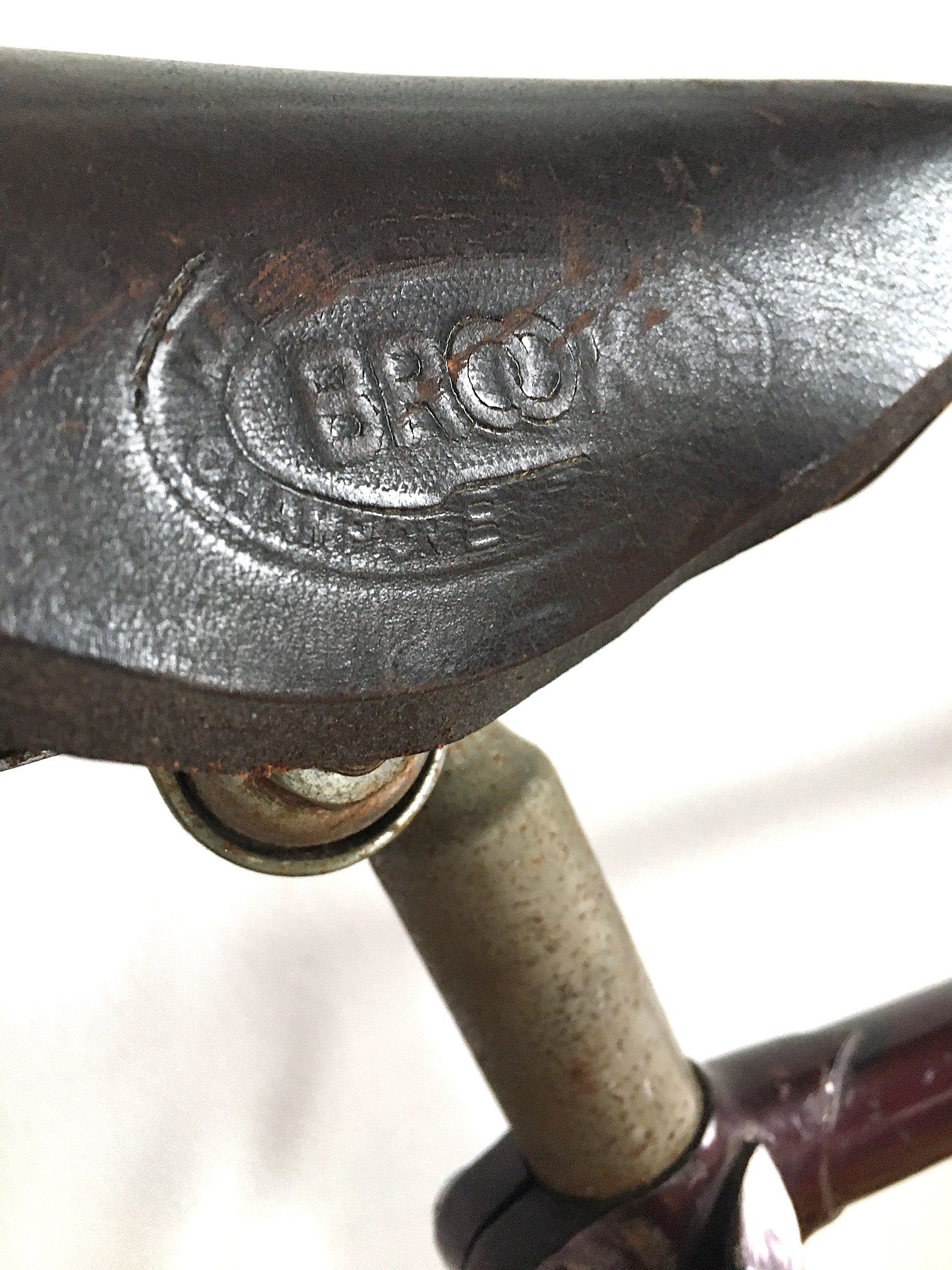
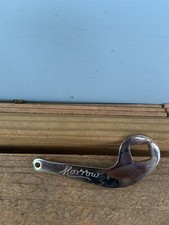
Recently I acquired this bike from a family that wanted to have me preserve it for wall hanging. It was sold by Country Lane Antiques in Wayzata, MN USA. The post-it note from the shop claimed that it was copper plated and ridden by a Chinese rider in the 1929 Olympics! Obviously that is quite erroneous information and I've really got nothing to go by other than the bike itself. I've finished the preservation and the goal was to bring out the paint that was coated in surface rust, find some suitable tubular tires and leave everything else alone. Pleased with the results, but am only beginning to scratch the surface with the back story. I believe it was made by Emil, or perhaps Oscar Wastyn in Chicago or potentially Durkopp in Germany. Very light at 20lbs with butted tubing throughout. Definitely was tailor made with all sorts of little high-end touches, like it actually could have been an Olympic bike, or perhaps a six-day racer. Integrated headset, open fish-mouth stays and fork blades, 27.2 seat post, small 10mm seat stay bridge and classic Wastyn-style lugs. Right rear dropout stamped "892". No stamping on the bb shell. The wheels have "Fairbanks Boston", Alma Michigan laminated wood rims with a 1893 patent date and are stamped with a 6, perhaps denoting an 1896 manufacture, making at least the rims, much older than the frameset The high-flange hubs have riveted flanges, keenly noted by a commenter as pre-war as Airlites. One of the big clues is the only alloy part on the bike, the stem extension marked "Ken Winkie" I believe Ken was a 6 day racer and eventually became a distributor, bringing in German made frames and other parts and accessories. So, I'm not sure if this was his race bike and was made by Wastyn, or maybe one of the German made frames he brought in with his name on the stem extension. The unbadged Brooks B17 Champion Narrow saddle is it excellent condition and looks original. Williams chainset (dated 1936), Lyotard-appearing pedals and I believe Stronglight headset, only markings are "BSA" on the top nut. Any information or insight would be greatly appreciated. This bike is pretty special and I'm determined

IMG_1405.JPG
investigate the story and history of both its use and manufacture. Thanks!

IMG_1411.JPG


IMG_1410.JPG


IMG_1403.JPG


IMG_1402.JPG


IMG_1399.JPG


IMG_1393.JPG


IMG_1392.JPG


IMG_1390.JPG


IMG_1388.JPG


IMG_1387.JPG


IMG_1398 (1).JPG


IMG_1389.JPG


IMG_1386.JPG


IMG_1385.JPG


IMG_1384.JPG


IMG_1383.JPG


IMG_1382.JPG


IMG_1381.JPG


IMG_1379.JPG


IMG_1378.JPG


IMG_1376.JPG


IMG_1375.JPG


IMG_1373.JPG


IMG_1372.JPG
 
-----

WOW!

thanks very much for sharing this treasure with the forum

---

headset note -

locknut certainly appears Stronglight P3
have na'er seen nor heard tell of a Stronglight integral
knurling pattern of adjustable race not one employed by Verot

the contour of the shoulder of the adjustable race is not one can recall seeing previously

when you open it you may discover it to be one of the Brampton Bros. designs with floating u-races and 1/8" ball

since the assemblage of bits appears the result of cobbling its identity may remain undetermined

---

pedals are the Faucheux model from Lyotard

Lyotard pedal catalogue page 1935-37 b) .jpg

[catalogue page from the Vignal firm of Paris, 1935; the 678 item number is from Vignal rather than Lyotard]

1770384087597.png


there are two generations/varieties of these depending upon whether they exhibit raised points/spurs on all four corners of the cage or on the inner corners only

those worn by the subject machine are of the latter type

---

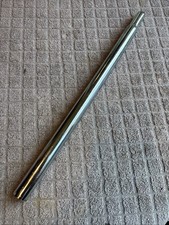
saddle pillar is of high quality as can be seen by the way the top is done; you may discover a maker's mark when you withdraw it...

---

forum hath no shortage of Wastyn experts who should be along shortly to share some solid information...😉


-----
 
Last edited:
-----

WOW!

thanks very much for sharing this treasure with the forum

---

headset note -

locknut certainly appears Stronglight P3
have na'er seen nor heard tell of a Stronglight integral
knurling pattern of adjustable race not one employed by Verot

the contour of the shoulder of the adjustable race is not one can recall seeing previously

when you open it you may discover it to be one of the Brampton Bros. designs with floating u-races and 1/8" ball

---

pedals are the Faucheux model from Lyotard

View attachment 2364053
[catalogue page from the Vignal firm of Paris, 1935; the 678 item number is from Vignal rather than Lyotard]

View attachment 2364054

there are two generations/varieties of these depending upon whether they exhibit raised points/spurs on all four corners of the cage or on the inner corners only

those worn by the subject machine are of the latter type

---

saddle pillar is of high quality as can be seen by the way the top is done; you may discover a maker's mark when you withdraw it...

---

forum hath no shortage of Wastyn experts who should be along shortly to share some solid information...😉


-----

Thanks a bunch for the info, every scrap of it helps!
 
Wastyn still is in business in the Chicago area. The color and Componets are similar to the the one I had. I determined mine was a 32. It is in a museum in the Milwaukee area.
 
I’m pretty sure this is not a Wastyn bicycle, this bike has real Pop Brennan vibes and I don’t say that often because they are pretty rare. Pop always seems to be the go to name when anyone pulls an old bike from an attic or shed, just below any 30’s bike that happens to have a BSA chainring being called a BSA. It’s also a strange coincidence that the bikes paint is the same color as my Brennan. The riveted Airlite hubs are also pretty rare. That is a complete and rare six day bike, stop the rust and do no harm, that’s a beautiful piece of history.
 
I’m pretty sure this is not a Wastyn bicycle, this bike has real Pop Brennan vibes and I don’t say that often because they are pretty rare. Pop always seems to be the go to name when anyone pulls an old bike from an attic or shed, just below any 30’s bike that happens to have a BSA chainring being called a BSA. It’s also a strange coincidence that the bikes paint is the same color as my Brennan. The riveted Airlite hubs are also pretty rare. That is a complete and rare six day bike, stop the rust and do no harm, that’s a beautiful piece of history.

Taking a closer look at some "Pop" bikes, you may be right. I've seen head lugs that look almost identical on Wastyns, "Pop" Brennans and Durkopps from Germany. The semi-integrated headset is also common on Wastyns and Brennans. Pretty certain now that it's a Brennan or a Wastyn. I thought the serial number on the right dropout would be a good clue. I haven't seen a "Pop" bike with serial number on the right dropout. Still more investigating needed on this one, but getting closer!
 
Last edited:
Update- Through research and talking with colleagues, there is a good chance this is a "Pop" Brennan bike. While many features are similar to Wastyns' frames, the color, lug treatments, integrated headset make me lean towards Wastyn or Brennan. Brennan's bikes never had a serial number on the right dropout like this one though and the Wastyns would stamp a serial number if you wanted them to.
 
too bad the frame is bent, will need a down tube at least.

The frame isn't bent, nor are there any dents, dings or damage. Not sure where you got that from. Also, the bike is going to be displayed as is. I got the paint color to come back and it's best to leave everything else alone, that's part of the story.
 
Recently I acquired this bike from a family that wanted to have me preserve it for wall hanging. It was sold by Country Lane Antiques in Wayzata, MN USA. The post-it note from the shop claimed that it was copper plated and ridden by a Chinese rider in the 1929 Olympics! Obviously that is quite erroneous information and I've really got nothing to go by other than the bike itself. I've finished the preservation and the goal was to bring out the paint that was coated in surface rust, find some suitable tubular tires and leave everything else alone. Pleased with the results, but am only beginning to scratch the surface with the back story. I believe it was made by Emil, or perhaps Oscar Wastyn in Chicago or potentially Durkopp in Germany. Very light at 20lbs with butted tubing throughout. Definitely was tailor made with all sorts of little high-end touches, like it actually could have been an Olympic bike, or perhaps a six-day racer. Integrated headset, open fish-mouth stays and fork blades, 27.2 seat post, small 10mm seat stay bridge and classic Wastyn-style lugs. Right rear dropout stamped "892". No stamping on the bb shell. The wheels have "Fairbanks Boston", Alma Michigan laminated wood rims with a 1893 patent date and are stamped with a 6, perhaps denoting an 1896 manufacture, making at least the rims, much older than the frameset The high-flange hubs have riveted flanges, keenly noted by a commenter as pre-war as Airlites. One of the big clues is the only alloy part on the bike, the stem extension marked "Ken Winkie" I believe Ken was a 6 day racer and eventually became a distributor, bringing in German made frames and other parts and accessories. So, I'm not sure if this was his race bike and was made by Wastyn, or maybe one of the German made frames he brought in with his name on the stem extension. The unbadged Brooks B17 Champion Narrow saddle is it excellent condition and looks original. Williams chainset (dated 1936), Lyotard-appearing pedals and I believe Stronglight headset, only markings are "BSA" on the top nut. Any information or insight would be greatly appreciated. This bike is pretty special and I'm determined

View attachment 2364010 investigate the story and history of both its use and manufacture. Thanks!

View attachment 2364011

View attachment 2364012

View attachment 2364013

View attachment 2364014

View attachment 2364015

View attachment 2364016

View attachment 2364017

View attachment 2364018

View attachment 2364019

View attachment 2364020

View attachment 2364021

View attachment 2364022

View attachment 2364023

View attachment 2364024

View attachment 2364025

View attachment 2364026

View attachment 2364027

View attachment 2364028

View attachment 2364029

View attachment 2364030

View attachment 2364031

View attachment 2364032

View attachment 2364033

View attachment 2364034

Hi I’ve just seen this post. Here’s what I can contribute. Ken Winkie was indeed a racer although I’ve never seen a program with his bio in it He was from the Chicago land area and I believe Ted Ernst may be the only one still living that knew him personally.
The bike is fabulous with all the right stuff. The color was a pretty common color in the 30s. Since this was a true racing bike it could be not the original color but that doesn’t matter so much if the bike was raced hard. We have a bunch of bikes that have been painted multiple times because off repairs etc
As to the maker it’s hard to determine but I can tell you what I think. The head lug design was used by a number of builders. Brennan, Wastyn, goosens, Sieber, torpado and more
Brennans work is the best treatment and these lugs are very close. The non Brennan detail is the rear drop outs. Brennan hand cut his lugs from brown and sharp steel. Bill Brennan gave me the template they always used and this does not match . The Brennans never used frame numbers as far as I know and from what Bill Brennan told me. Traditionally the Brennans had a notch in the head lugs at top and bottom and tin the fork crown window which was usually a much larger cut away. Brennan did phase out the knotch due to cracking in the later 30s on the head lugs. I can’t say for sure but I’ve never seen rear drop outs like these on any of the Brennans in our collection. Inmho it could be and regardless it is an amazing bike. It’s also possible the rear tips were replaced as the finish on the stay ends is rougher than the Brennans did

IMG_8450.jpeg


IMG_8452.jpeg


IMG_6744.jpeg


IMG_5863.jpeg


IMG_5253.jpeg
 
Back
Top