
You are using an out of date browser. It may not display this or other websites correctly.
You should upgrade or use an alternative browser.
You should upgrade or use an alternative browser.
When you click on links to various merchants on this site and make a purchase, this can result in this site earning a commission. Affiliate programs and affiliations include, but are not limited to, the eBay Partner Network.
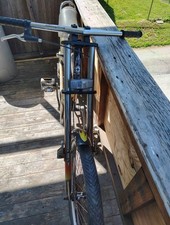
What can you tell me about this JC Higgins?
- Thread starter Kaiserman
- Start date
#eBayPartner Most Recent BUY IT NOW Items Listed on eBay










Kaiserman
Finally riding a big boys bike
Let her try it with new tires, it’ll ride like a different bike!
She doesnt want to ride it at all. She's 5-0, she's a bit intimidated by its size and weight. I picked up a "Schwinn" mountain bike for her last year she likes.
She doesnt want to ride it at all. She's 5-0, she's a bit intimidated by its size and weight. I picked up a "Schwinn" mountain bike for her last year she likes.
I agree with Mark@MRG about new tires. My wife has a B6 that she found hard to ride and I put new tires on it. She likes it now, easier to ride as the old tires were rock hard. If you want to get her a vintage bike and she's 5'0 maybe consider a bike with 24" tires and smaller frame?
There are some very cool 24" bikes out there.
But no point in forcing it...good for you for trying. If she'll ride with you on her modern bike at least she's riding..
Kaiserman
Finally riding a big boys bike
I agree with Mark@MRG about new tires. My wife has a B6 that she found hard to ride and I put new tires on it. She likes it now, easier to ride as the old tires were rock hard. If you want to get her a vintage bike and she's 5'0 maybe consider a bike with 24" tires and smaller frame?
There are some very cool 24" bikes out there.
But no point in forcing it...good for you for trying. If she'll ride with you on her modern bike at least she's riding..
A 24" might be better sized for her. I'll keep running old bikes by her. She may like one of them.

coasterbrakejunkie1969
Riding a '38 Autocycle Deluxe
A 24" might be better sized for her. I'll keep running old bikes by her. She may like one of them.
I would look for a ‘70s Hollywood or the like. The middleweights with 45psi tires are super easy peddling and come in fantastic colors. Even a nice light weight would be even easier to ride. Both styles came in 24 inch, a bit harder to find but they are out there. My daughters Hollywood and my wife’s Breeze.
Kaiserman
Finally riding a big boys bike
I would look for a ‘70s Hollywood or the like. The middleweights with 45psi tires are super easy peddling and come in fantastic colors. Even a nice light weight would be even easier to ride. Both styles came in 24 inch, a bit harder to find but they are out there. My daughters Hollywood and my wife’s Breeze.
View attachment 2409489
View attachment 2409490
Those are pretty bikes! I'm going to show them to her this weekend and see what she thinks of them. The JC Higgins found a home in Puerto Rico. A guy visiting the states for a local antique show bought it.
coasterbrakejunkie1969
Riding a '38 Autocycle Deluxe
Those are pretty bikes! I'm going to show them to her this weekend and see what she thinks of them. The JC Higgins found a home in Puerto Rico. A guy visiting the states for a local antique show bought it.
There may be a few on Facebook marketplace near you.

Hastings
Riding a '38 Autocycle Deluxe
Hello...
Your J.C. Higgins bicycle is a 1949 model from the DeLuxe ColorFlow series. Not "running changes." One needs to understand the real bicycles VS. what may seem to be in the catalogues... and why.
This hobby with all of its guessing and jumping to conclusions has standardized a LOT of misinformation and myths about J.C. Higgins. This is mainly because people imagine that a "book" made of Xeroxed copies from a few Sears mail-order catalogues is the BE-all and END-all authority on J.C. Higgins bicycles. WRONG. Having this belief will merely lead you in circles on top of circles.
• "Color-Flow" or "ColorFlow" was not a certain design look or MODEL– no matter what the internet or "books" or today's hobbyists may tell you. It was the name of a design THEME and covered MANY different models, years and designs. NOT merely one. How do we know this? Because our friend who designed and oversaw designs of these models told us so over fifty years ago. And National Bicycle History Archive of America has all of the factory literature to back up this information. These include owner's manuals, in-house store information, original catalogues and more. We have been collecting this information since the 1950s, so none of what we tell you are guesses.
• There was NOT one model or design of J.C. Higgins per year. Often times there were several different models AND options in one year.
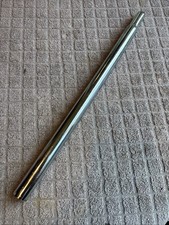
• When the "flow-motion wonderide" spring fork (what we named "bee hive") was first introduced, it was as an option– not as standard equipment. One had to order it and pay extra. ALSO... there were different versions of this fork as time went by. So not all are the same. Early truss rods were deleted, pivot shoulder bolts were changed and made beefier, pivot "clips" were modified, horizontal fender braces were completely re-designed. And more.
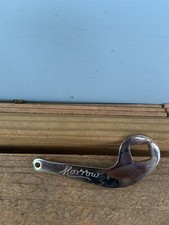
• There were numerous DIFFERENT versions of the J.C. Higgins "bat-wing" headlight and hornlight. Bottoms, sometimes tops and other aspects were changed over the years– especially depending on the application. They were not all the same.
• ALLSTATE brand tires were standard on all J.C. Higgins bicycles except one. ALLSTATE was Sears' own house brand of tire. It should thus be no surprise to find them on an unmolested original J.C. Higgins bicycle. But the real question is WHY would you want to ride on ancient tires that are best to remove and preserve????? Such ancient tires could rupture and/or degrade and then they are gone forever! AND a sudden blow-out could seriously injure the rider. RIDE on NEW tires and tubes. SAVE the originals for display. Surely you would not drive your automobile on 60-year-old tires would you? Why take a chance on injuring yourself WHILE destroying an original pair of beautiful Allstates????? And if you choose to follow those naysayers who will brag and swear, "I ride my original tires all the time and nothing happened to me!"... NOTHING may happen– UNTIL it does. We knew someone like this in SoCal in the 1970s who contributed significantly to their dentist's and chiropractor's bottom line income one year. All courtesy of "riding on those cool original tires"... Our advice is don't do it. Even for those who are lucky, the mathematical odds are definitely NOT in your favor.
Leon Dixon
National Bicycle History Archive of America
NBHAA.com
View attachment 2408547
View attachment 2408548
View attachment 2408549
View attachment 2408550
View attachment 2408551
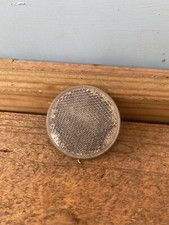
Leon, Is there any truth to Buick making them change the port holes to reflectors on the colorflow tanks as it copied their car design too closely. I showed someone a picture of my colorflow once and their response was “they got the reflectors because they were sued by Buick” just wondering if there’s any truth to this or just folklore. Thanks!

NBHAA
National Bicycle History Archive of America
Leon, Is there any truth to Buick making them change the port holes to reflectors on the colorflow tanks as it copied their car design too closely. I showed someone a picture of my colorflow once and their response was “they got the reflectors because they were sued by Buick” just wondering if there’s any truth to this or just folklore. Thanks!
View attachment 2410619
View attachment 2410620
Hello,
We'll answer this question in a public posting, which we rarely do. Parts of this response were written by yours truly in the era of lightweight bicycles and the 10-speed craze long ago. To some bicycle fanatics back then, cars were a dirty word and "heavyweight" balloon tired classic bicycles? Who wanted to read about their history? Or even if they had one! Nobody would publish it. So remember where you read this. Copyright © 1979 and 2026, Leon Dixon. All rights reserved.
First, one needs to know that car companies back in those days cared little about what bicycle companies and brands were doing. If things were otherwise, there would be no such thing as Packard bicycles or Cadillac bicycles or Pontiac bicycles or Roadmaster bicycles. Or "Firebird" or "Thunderbird" or "Coupe DeVille" or "Luxury Liner" model names! And on and on. After all– in THOSE times long before mega-loads of outrageous frivolous "hot coffee" lawsuits, it was obvious that a bicycle was a bicycle... and a car was obviously a car. We asked several car designers and industrial designers (years ago when it was possible because these guys were still breathing) what they thought about cars and bicycles having similar design cues. These included several big league and others most never heard of. Several were personal friends.
• Chuck Jordan (we worked many years with his son)
• Ray Dietrich (who designed fabulous cars from Packards, Cadillacs, and President Eisenhower's Lincoln Cosmo– AND our Gibson Firebird guitar and prototype Thunderbird bass)
• Alex Tremulis (Tucker and many more)
• Richard Arbib (Packard Pan Americans and Monte Carlos, Astra-gnome, more)
• Richard Teague (Packards, various American Motors cars, more)
• Viktor Schreckengost (bicycles, cars and more)
• Ben Bowden (Bowden bicycles, several Healeys and more)
• Wilbur Henry Adams (Hawthorne bicycles and more)
• Philip Wright (Pierce-Arrow Silver Arrow and numerous others)
• Howard "Dutch" Darrin (Packard, Kaiser, and numerous others)
• Harley Earl, Inc, (Harley Earl's design firm... several employees did both cars and bicycles)
... just to name a few. YES... we actually interviewed these people and businesses regarding bicycle and automotive design. When asked about bicycles with similar design cues or even names, many were unaware. Others knew and thought the notion was natural, humorous, even flatteringl Most saw it as bicycles paying tribute forward to automobiles. After all, as Americans saw it, a bicycle was a step on the way of a boy growing up and buying a car! So why not?
Then one needs to know about Buick design cues, who did them and when. As we have said, numerous designers of bicycles and components actually worked in the car business. SOME even for Buick! Yes, it is true, for instance that J.C Higgins of the early 1950s followed Buick's design cues of what Buick termed "VentiPorts." These Buick VentiPorts were the brainchild of GM designer, Ned Nickles.
Some accounts say that the VentiPorts were stylized renditions of automotive hood vents of the 1930s and 1940s. One history even claims that one original plan was to feature lights inside the VentiPorts. These lights would have been synchronized to the igniting spark plugs on the engine! This would have been a dramatic sight– especially at night. However for whatever reason this fanciful format was nixxed and never made production.
Car crazy Buick fans in the 1950s (as we were) would quickly tell you that FOUR VentiPorts on the front fender meant you were looking at a top-of the line deluxe luxury model like a Roadmaster. However THREE VentiPorts on the front fenders indicated quality, but a lesser model. Buick used these design cues for many, many years. By the way, first use of "Roadmaster" by Buick was 1936. Guess what year Cleveland Welding Company debuted their Roadmaster bicycles???
In the case of J.C. Higgins, Vik Schreckengost openly admitted to us that Buick was a source of inspiration. And yes, the VentiPorts did indeed follow Buick's format. Four portals were top-of-the-line. Three was quality, but less prestige and features. Early Higgins tank vents were open, but later, domed glass reflectors (the same as used on the deluxe carriers at that time) were added in the ports of the to-of-the-line models. But this was considered to be a safety feature for night riding. In an era where car designs (and many other designs as well) were expected to be "new" and different every 365 days... this kind of thing was to be expected! 1950s Americans would have never tolerated the same old design of bicycle (or car) year after year as people do today!
In all of the many conversations we had of such things with automotive designers years ago, not one ever mentioned legal issues over the Higgins tank themes and Buick's VentiPorts. So if such things happened these people were certainly in positions to know.
You might take interest in knowing that Delta Electric AND Bicycle companies (INCLUDING the almighty Arnold, Schwinn & Co.) boldly copied lighting directly directly (or indirectly) from automobile parking lights and headlights. The most obvious (OR ought to be) example here is the omnipresent Schwinn streamlined fenderlight. No matter who denies it, this 1940 bicycle debut came also directly from 1939 Dodge automobile fender-mounted parking lights. The guts, lower curvature and lens were very slightly modified and...VOILA! The streamlined Schwinn fender light made by the bushels!
The so-called "alien" Elgin headlight was copied from Cadillac. At least two Delta tail lights were copied from Cadillac and from Packard (one almost exact). Of course, most bicycle collectors today don't know that Delta supplied the automotive industry with all kinds of lighting designs and products for many, many years.
Finally, we interviewed the designer of several Colson bicycles of the 1930s. Yes, he did automotive designs. Yes, Harley Earl's LaSalle AUTOMOBILE circular hood vents that were a sensation in the car biz long before Buick's VentiPorts were indeed an influence! Yes and YES! By the way– no matter how many bicycle people today think Schwinn-Built bicycles with a headbadge that says "LaSalle" tie it to the car... not so. The Chicago wholesale-distributor that handled those bicycles chose it because "LaSalle" was a famous district in downtown Chicago. There was even a large luxury hotel there in the old days with that name.
Ohh... and no matter how many times ASC denied the origins of the design, Schwinn worshippers ought to be down on their knees thanking the designers of 1939 Dodge. See why below.
Leon Dixon
National Bicycle History Archive of America
NBHAA.com
P.S.... the J.C. Higgins shown here appears to have a Persons brand saddle newer than the bicycle. The original saddle for this Higgins deluxe most had no crash ring– only side bumper tabs, riveted on and made ONLY by Troxel. Crash rings came later. Loopy nose coils were never used by Troxel. Only Persons, Mesinger and Faulhaber used such a nose coil.
Last edited:
Hastings
Riding a '38 Autocycle Deluxe
Hello,
We'll answer this question in a public posting, which we rarely do. Parts of this response were written by yours truly in the era of lightweight bicycles and the 10-speed craze long ago. To some bicycle fanatics back then, cars were a dirty word and "heavyweight" balloon tired classic bicycles? Who wanted to read about their history? Or even if they had one! Nobody would publish it. So remember where you read this. Copyright © 1979 and 2026, Leon Dixon. All rights reserved.
First, one needs to know that car companies back in those days cared little about what bicycle companies and brands were doing. If things were otherwise, there would be no such thing as Packard bicycles or Cadillac bicycles or Pontiac bicycles or Roadmaster bicycles. Or "Firebird" or "Thunderbird" or "Coupe DeVille" or "Luxury Liner" model names! And on and on. After all– in THOSE times long before mega-loads of outrageous frivolous "hot coffee" lawsuits, it was obvious that a bicycle was a bicycle... and a car was obviously a car. We asked several car designers and industrial designers (years ago when it was possible because these guys were still breathing) what they thought about cars and bicycles having similar design cues. These included several big league and others most never heard of. Several were personal friends.
• Chuck Jordan (we worked many years with his son)
• Ray Dietrich (who designed fabulous cars from Packards, Cadillacs, and President Eisenhower's Lincoln Cosmo– AND our Gibson Firebird guitar and prototype Thunderbird bass)
• Alex Tremulis (Tucker and many more)
• Richard Arbib (Packard Pan Americans and Monte Carlos, Astra-gnome, more)
• Richard Teague (Packards, various American Motors cars, more)
• Viktor Schreckengost (bicycles, cars and more)
• Ben Bowden (Bowden bicycles, several Healeys and more)
• Wilbur Henry Adams (Hawthorne bicycles and more)
• Philip Wright (Pierce-Arrow Silver Arrow and numerous others)
• Howard "Dutch" Darrin (Packard, Kaiser, and numerous others)
• Harley Earl, Inc, (Harley Earl's design firm... several employees did both cars and bicycles)
... just to name a few. YES... we actually interviewed these people and businesses regarding bicycle and automotive design. When asked about bicycles with similar design cues or even names, many were unaware. Others knew and thought the notion was natural, humorous, even flatteringl Most saw it as bicycles paying tribute forward to automobiles. After all, as Americans saw it, a bicycle was a step on the way of a boy growing up and buying a car! So why not?
Then one needs to know about Buick design cues, who did them and when. As we have said, numerous designers of bicycles and components actually worked in the car business. SOME even for Buick! Yes, it is true, for instance that J.C Higgins of the early 1950s followed Buick's design cues of what Buick termed "VentiPorts." These Buick VentiPorts were the brainchild of GM designer, Ned Nickles.
Some accounts say that the VentiPorts were stylized renditions of automotive hood vents of the 1930s and 1940s. One history even claims that one original plan was to feature lights inside the VentiPorts. These lights would have been synchronized to the igniting spark plugs on the engine! This would have been a dramatic sight– especially at night. However for whatever reason this fanciful format was nixxed and never made production.
Car crazy Buick fans in the 1950s (as we were) would quickly tell you that FOUR VentiPorts on the front fender meant you were looking at a top-of the line deluxe luxury model like a Roadmaster. However THREE VentiPorts on the front fenders indicated quality, but a lesser model. Buick used these design cues for many, many years. By the way, first use of "Roadmaster" by Buick was 1936. Guess what year Cleveland Welding Company debuted their Roadmaster bicycles???
In the case of J.C. Higgins, Vik Schreckengost openly admitted to us that Buick was a source of inspiration. And yes, the VentiPorts did indeed follow Buick's format. Four portals were top-of-the-line. Three was quality, but less prestige and features.
In all of the many conversations we had of such things with automotive designers years ago, not one ever mentioned legal issues over the Higgins tank themes and Buick's VentiPorts. So if such things happened these people were certainly in positions to know.
You might take interest in knowing that Delta Electric AND Bicycle companies (INCLUDING the almighty Arnold, Schwinn & Co.) boldly copied lighting directly directly (or indirectly) from automobile parking lights and headlights. The most obvious (OR ought to be) example here is the omnipresent Schwinn streamlined fenderlight. No matter who denies it, this 1940 bicycle debut came also directly from 1939 Dodge automobile fender-mounted parking lights. The guts, lower curvature and lens were very slightly modified and...VOILA! The streamlined Schwinn fender light made by the bushels!
The so-called "alien" Elgin headlight was copied from Cadillac. At least two Delta tail lights were copied from Cadillac and from Packard (one almost exact). Of course, most bicycle collectors today don't know that Delta supplied the automotive industry with all kinds of lighting designs and products for many, many years.
Finally, we interviewed the designer of several Colson bicycles of the 1930s. Yes, he did automotive designs. Yes, Harley Earl's LaSalle AUTOMOBILE circular hood vents that were a sensation in the car biz long before Buick's VentiPorts were indeed an influence! Yes and YES! By the way– no matter how many bicycle people today think Schwinn-Built bicycles with a headbadge that says "LaSalle" tie it to the car... not so. The Chicago wholesale-distributor that handled those bicycles chose it because "LaSalle" was a famous district in downtown Chicago. There was even a large luxury hotel there in the old days with that name.
Ohh... and no matter how many times ASC denied the origins of the design, Schwinn worshippers ought to be down on their knees thanking the designers of 1939 Dodge. See why below.
Leon Dixon
National Bicycle History Archive of America
NBHAA.com
View attachment 2410824
View attachment 2410825
View attachment 2410826
View attachment 2410827
View attachment 2410829
Excellent information thank you!
Similar threads


- Replies
- 8
- Views
- 459


- Replies
- 3
- Views
- 461

- Replies
- 3
- Views
- 284