




mike cates
Cruisin' on my Bluebird
This is how many of us have crated bicycles to know they will get there safely as possible:
In this example a high wheel bicycle is shown but can be adapted to other type bicycles.
Measure your bicycle carefully and build crate as shown.
The wheels should fit a little loose so soft cloth or soft foam sheet can be squeezed in at final packing.
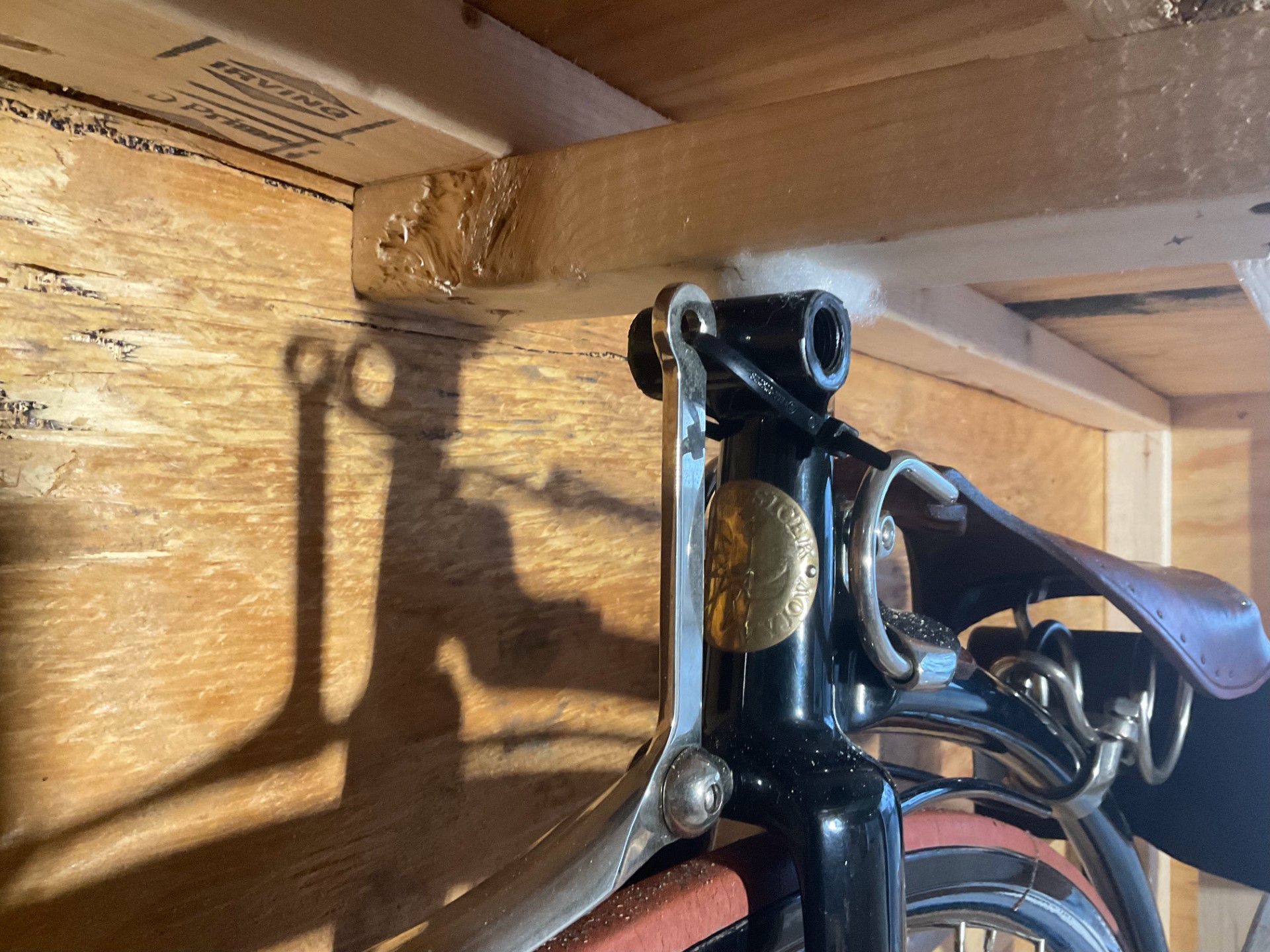
The hole at the top of the steering head can also be a little loose for soft cloth or soft foam to be squeezed in.
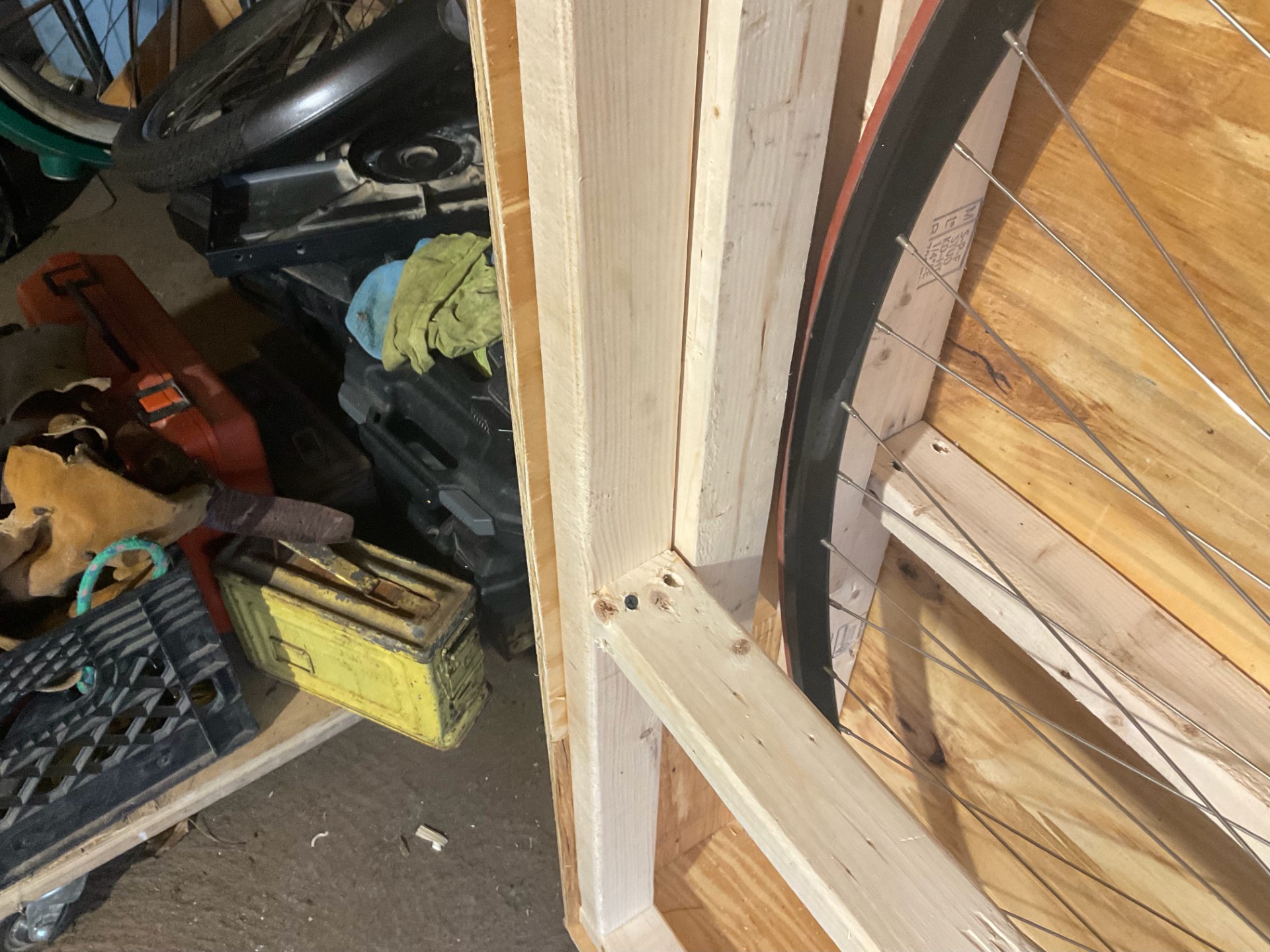
Note the cross bracing and inner thickness bracing to enhance the side loading of the crate if it fell over and something fell on the side.
Mark one side with a sharpie felt pen around drywall screw holes labeling as a “Removable Panel” for customs OR the new owner.
Pack pedals and handlebar in one box and affix it within the crate so it won't move around.
Pedals can also be reversed inward,tightened and will not add more width than their end nuts.
Put Sender's & Receiver's info in a clear sealed with tape plastic sleeve in the crate should all outside info get defaced or removed.
Specify with shipper to put the following on the BOL (Bill Of Lading) so drivers, etc will see it:
“Top Load Only” so nothing gets stacked on top of the crate.
“Keep Upright” put arrows on outside but the 3 wood “skids” at bottom will mean lifting point for forklift/pallet jack to warehouse workers.
“Do Not Stack” meaning the crate doesn't get stacked on other crates increasing it's chances to fall off of them in shipment.
With all this boiler plate information specified on the BOL, it makes the driver look a little closer as to placement in the truck so it's protected better and doesn't get moved around as much on his route. It also protects YOU if something were to happen damaging the crate and it's contents.
Shipping Insurance:
If you build the crate like this example shown, you have dramatically reduced possible shipment damage and won't have to put extra insurance on the crate which if you do, in some cases, may make the inspectors curious as to "why" is this is insured for so much and it possibly get inspected.
Materials:
Plywood such as 1/4” or heavier for outside panels.
(Pine, Douglas Fir, etc.) 2” X 2”'s for inner rails (or heavier 2”X3” or 2”X4”'s for inner bracing/rails.
Use steel drywall screws (not nails) as they hold the panels better during shipping/handling & are easily removed. Make sure all screws are driven below flush.
Rough wood file / belt or disc sand all sharp corners so crate doesn't get hung up on other crates when being moved and loaded.
Notes:
Remember that the volume weight for a large crate like this is usually way more than the bike inside. The shipper goes by Length, Width and Height and of course Weight.
Find out from your shipper what your limitations for sizing and weight are to get the best rates.
Also, if your shipper is willing to work with you, ask for the rate if the contents were classified as “bicycle rims” or “bicycle parts” as there are different classes like Class 100 or Class 125 that can save you some shipping cost.
I have always used FedEx as the shipper but go through a friend of mine contracted withFed Ex
via England Logistics and that is who bills me.
Also it is much cheaper to use GROUND and taking the boxed bike to an actual FedEx terminal rather than the public strip mall stores and sending it to a FedEx terminal near your receiving person for them to pick up at WILL CALL.
If you have any questions call my shipper direct and he can arrange shipments “To” and “From” all over the country.
My Shipper's Contact Info:
MIKE PONCE (760) 683-1975 tell him you know Mike Cates, Carlsbad, CA who has shipped many antique bicycles with him for many years, he's a fair guy.
Mike Cates, CA.




In this example a high wheel bicycle is shown but can be adapted to other type bicycles.
Measure your bicycle carefully and build crate as shown.
The wheels should fit a little loose so soft cloth or soft foam sheet can be squeezed in at final packing.
The hole at the top of the steering head can also be a little loose for soft cloth or soft foam to be squeezed in.
Note the cross bracing and inner thickness bracing to enhance the side loading of the crate if it fell over and something fell on the side.
Mark one side with a sharpie felt pen around drywall screw holes labeling as a “Removable Panel” for customs OR the new owner.
Pack pedals and handlebar in one box and affix it within the crate so it won't move around.
Pedals can also be reversed inward,tightened and will not add more width than their end nuts.
Put Sender's & Receiver's info in a clear sealed with tape plastic sleeve in the crate should all outside info get defaced or removed.
Specify with shipper to put the following on the BOL (Bill Of Lading) so drivers, etc will see it:
“Top Load Only” so nothing gets stacked on top of the crate.
“Keep Upright” put arrows on outside but the 3 wood “skids” at bottom will mean lifting point for forklift/pallet jack to warehouse workers.
“Do Not Stack” meaning the crate doesn't get stacked on other crates increasing it's chances to fall off of them in shipment.
With all this boiler plate information specified on the BOL, it makes the driver look a little closer as to placement in the truck so it's protected better and doesn't get moved around as much on his route. It also protects YOU if something were to happen damaging the crate and it's contents.
Shipping Insurance:
If you build the crate like this example shown, you have dramatically reduced possible shipment damage and won't have to put extra insurance on the crate which if you do, in some cases, may make the inspectors curious as to "why" is this is insured for so much and it possibly get inspected.
Materials:
Plywood such as 1/4” or heavier for outside panels.
(Pine, Douglas Fir, etc.) 2” X 2”'s for inner rails (or heavier 2”X3” or 2”X4”'s for inner bracing/rails.
Use steel drywall screws (not nails) as they hold the panels better during shipping/handling & are easily removed. Make sure all screws are driven below flush.
Rough wood file / belt or disc sand all sharp corners so crate doesn't get hung up on other crates when being moved and loaded.
Notes:
Remember that the volume weight for a large crate like this is usually way more than the bike inside. The shipper goes by Length, Width and Height and of course Weight.
Find out from your shipper what your limitations for sizing and weight are to get the best rates.
Also, if your shipper is willing to work with you, ask for the rate if the contents were classified as “bicycle rims” or “bicycle parts” as there are different classes like Class 100 or Class 125 that can save you some shipping cost.
I have always used FedEx as the shipper but go through a friend of mine contracted withFed Ex
via England Logistics and that is who bills me.
Also it is much cheaper to use GROUND and taking the boxed bike to an actual FedEx terminal rather than the public strip mall stores and sending it to a FedEx terminal near your receiving person for them to pick up at WILL CALL.
If you have any questions call my shipper direct and he can arrange shipments “To” and “From” all over the country.
My Shipper's Contact Info:
MIKE PONCE (760) 683-1975 tell him you know Mike Cates, Carlsbad, CA who has shipped many antique bicycles with him for many years, he's a fair guy.
Mike Cates, CA.
Last edited:


